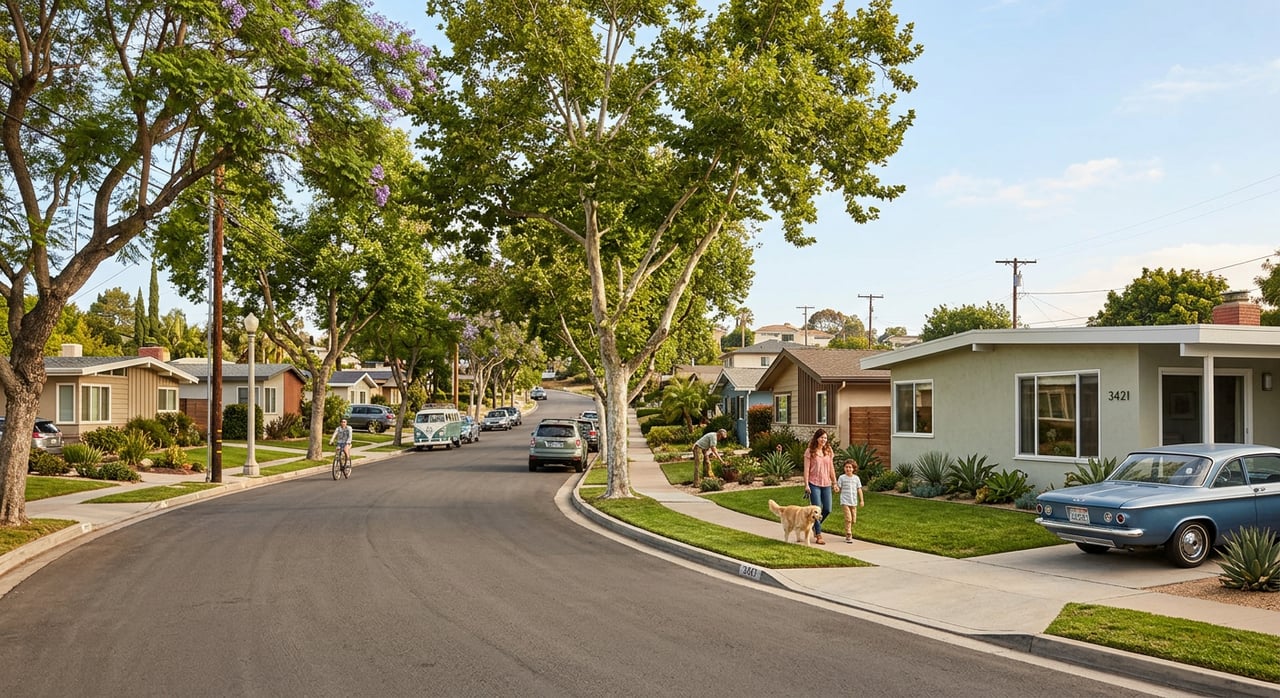
Living in El Cajon, San Diego: Your 2026 Neighborhood Guide
Neighborhood Guide Alyssa L. Davies September 16, 2026
Neighborhood Guide Alyssa L. Davies September 16, 2026
If you've been priced out of the coast and you're looking for a San Diego community where your budget still stretches, I think it's time to take a serious look at El Cajon.
And I can say that with a little more authority than most.
I grew up in Rancho San Diego, a suburb of El Cajon, so East County is home turf for me.
If you've lived in San Diego long enough, you've probably heard some version of the jokes about El Cajon. I've even heard it referred to as the "armpit of San Diego."
Harsh? Definitely.
But it also paints an entire community with one very broad brush.
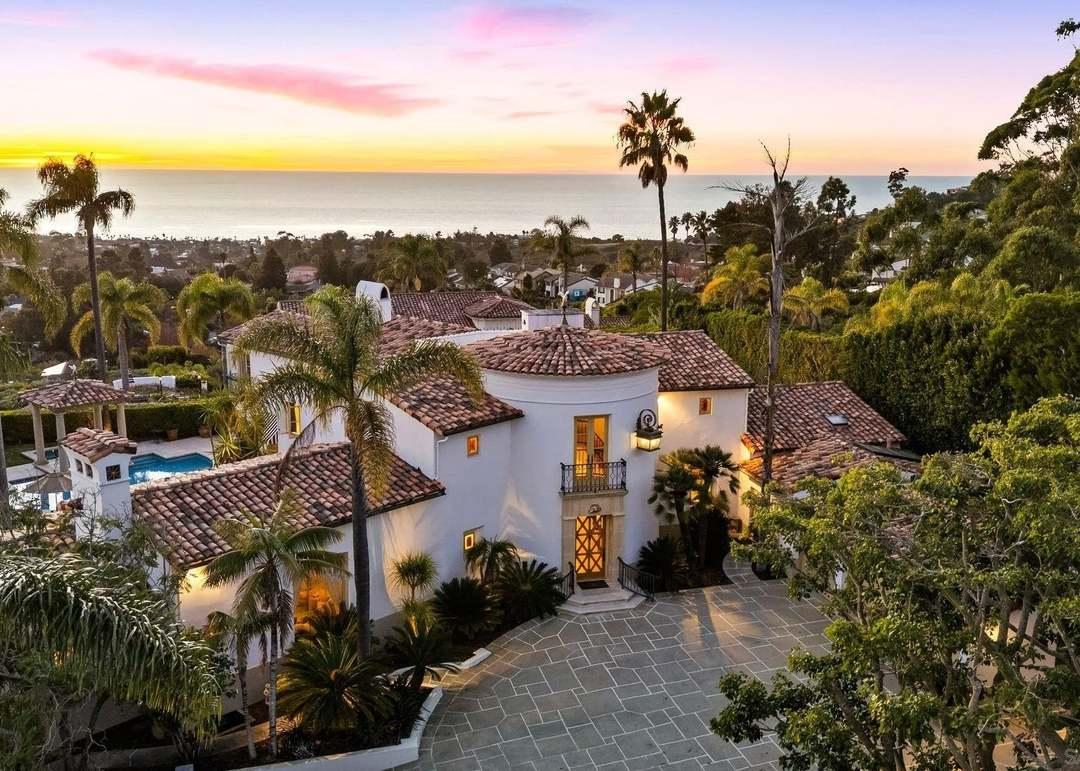
One thing you learn growing up here is that El Cajon is not one neighborhood, one price point, or one type of homeowner. There are lower-income apartment communities and entry-level condos. There are established neighborhoods filled with longtime homeowners. There are rural properties with acreage. And there are multimillion-dollar estates around Singing Hills and Steele Canyon golf courses and throughout the surrounding hills.
If you're searching for homes online, Rancho San Diego is part of that El Cajon conversation too. Those homes show up with El Cajon mailing addresses, yet the housing, lot sizes, schools and overall feel can be dramatically different from what someone unfamiliar with the area might picture when they hear "El Cajon."
You can't throw the baby out with the bathwater.
For the right buyer, El Cajon offers something that is getting increasingly difficult to find in San Diego County: more house, more land, more variety and, in certain pockets, room to actually spread out.
Here's what buyers, sellers and anyone considering a move to El Cajon should know in 2026.
Why Buyers Are Looking at El Cajon
Let's start with the obvious one: price.
As of August 2026, Redfin reports a $755,000 median sale price in El Cajon, up 4.1% from the same period a year earlier. San Diego County's median sale price was approximately $961,781 over the same period.
That's a difference of more than $200,000.
In a market where San Diego County's median price is approaching seven figures, that gap can completely change what a buyer is able to purchase.
But I think focusing only on affordability misses part of the story.
More Space Is Becoming Part of the Equation
One of the conversations I'm hearing more often is not simply, "How close can I get to the coast?"
It's:
"How much space can I actually get for my money?"
For some buyers, that means a bigger backyard for kids and dogs.
For others, it means RV parking, a boat, dirt bikes, trailers, a workshop or space for an ADU.
And increasingly, I'm seeing interest in properties that offer a little more independence. Buyers want room for gardens, chickens, fruit trees, solar, storage, multigenerational living and, in some cases, enough acreage to create a more self-sustaining property.
That's where East County can open up possibilities that are increasingly difficult to find closer to central San Diego.
As you move through El Cajon and into pockets like Granite Hills, Rancho San Diego, Blossom Valley, Harbison Canyon and Crest, the housing stock can change dramatically.
You can go from a condo to a traditional suburban home to several acres of land without moving to another part of the county.
For buyers who own toys, have hobbies that require space, want animals or simply don't want their neighbor six feet from their kitchen window, that matters.
El Cajon Is a Collection of Pockets, Not One Neighborhood
This is probably the biggest point I wish more people understood about El Cajon.
The label doesn't tell you enough.
There are established neighborhoods like Fletcher Hills and Granite Hills.
There are more rural options as you move toward Blossom Valley, Harbison Canyon and Crest.
You have Rancho San Diego, where I grew up, with established suburban neighborhoods and higher-end homes.
You have luxury properties and multimillion-dollar estates around Singing Hills and Steele Canyon golf courses and throughout the surrounding hills.
Then you have areas like Shadow Mountain and nearby Mount Helix, where larger homes, views and unique properties create another completely different feel.
And yes, there are also areas with older housing stock, higher-density apartments and lower price points.
That's the point.
El Cajon is diverse economically, culturally and physically.
According to the latest Census estimates, the City of El Cajon itself has a population of roughly 101,755, with a median household income of $67,511.
But a citywide statistic doesn't tell you what it's like to live on a particular street.
Having grown up here, that's what makes blanket statements about El Cajon frustrating.
There are areas I would want a buyer to investigate carefully. There are also neighborhoods that completely surprise people when they drive through them for the first time.
The street matters. The pocket matters. The property matters.
What Living in El Cajon Is Actually Like
Another thing El Cajon has going for it is connectivity.
Depending on where you live, you've got access to I-8, SR-67, SR-125 and SR-94.
And if you're coming from southern El Cajon, Rancho San Diego or the surrounding areas, locals know the 94 can be a direct shot into the city.
That ability to live somewhere that feels suburban, or even rural, while still having relatively direct access back toward central San Diego is a big part of East County's appeal.
There's also the trolley and bus network through the El Cajon Transit Center for people commuting toward SDSU, downtown or other areas of the county.
Then there's downtown El Cajon itself.
Main Street has restaurants, community events and local businesses, and there is an active effort underway to keep improving the downtown core. New City America, the company that has also managed improvement districts in Little Italy and downtown Chula Vista, assumed management of Downtown El Cajon in 2025.
And if you grew up in East County, you know Parkway Plaza.
The City is currently studying a much larger reimagining of the mall property into a more walkable, multipurpose district that could eventually incorporate housing, retail, gathering spaces and improved connectivity. The planning process is still underway, so this is a long-term story rather than something buyers should expect to see completed next year.
That's exactly the kind of long-term planning I like to watch when evaluating where a community may be headed.
And We Have to Talk About the Food
El Cajon's large Chaldean and broader Middle Eastern community has had a huge influence on the city.
If you haven't spent much time exploring the restaurants and markets around Main Street and Broadway, you're missing one of the best parts of El Cajon.
That's another reason I struggle with the old stereotypes about this area.
There is a lot more culture and community here than someone driving down I-8 might realize.
What About El Cajon Schools?
School quality is another example of why you can't make a blanket statement about El Cajon.
Ratings vary quite a bit depending on the neighborhood and the specific school assignment. Fuerte Elementary, Fletcher Hills Elementary and Hillsdale Middle currently carry 8/10 GreatSchools ratings, while Steele Canyon High is rated 9/10, Valhalla High 8/10, and Grossmont High 7/10.
Those ratings aren't the whole story, but they do challenge the assumption that moving east automatically means sacrificing school options.
Just like the housing itself, the pocket matters.
School boundaries can change significantly from one part of El Cajon to another, so buyers should verify the schools assigned to the exact property they're considering rather than relying on the city name or ZIP code alone.
If schools are an important part of your move, take the time to look beyond the headline rating too. Review academic performance, available programs, extracurriculars, parent feedback and anything else that matters to your family.
The goal isn't to decide whether "El Cajon schools" are good or bad. It's to understand the specific schools connected to the home you're considering.
What About Crime in El Cajon?
This is another subject where El Cajon's reputation tends to enter the conversation, so let's address it directly.
Here's the interesting part.
When NeighborhoodScout compares El Cajon specifically with other U.S. cities of similar population size, it says El Cajon's crime rate is noticeably lower than average.
The breakdown also matters.
The analysis puts El Cajon's violent crime rate at approximately 4.36 per 1,000 residents, compared with a national median of 4, while its property crime rate was approximately 15.23 per 1,000, compared with a national median of 18.
So does El Cajon have crime? Of course.
Is the entire city accurately represented by its reputation? The data suggests the answer is more complicated than that.
And just like housing, crime can vary significantly by location.
My advice is the same thing I'd tell anyone considering any neighborhood in San Diego County: look at current data around the exact property and experience the area yourself. Drive it during the day. Drive it after dark. Visit on a weekday and a weekend.
A citywide number can provide context.
It can't tell you what a specific street feels like.
El Cajon vs. Santee
El Cajon and Santee naturally end up on the same search for a lot of East County buyers, but they're different products.
Santee tends to have a more consistently suburban feel.
El Cajon has much more variety.
You can find condos and older homes closer to central El Cajon, established neighborhoods in Fletcher Hills and Granite Hills, suburban homes throughout Rancho San Diego, larger properties as you move farther east and rural options around Blossom Valley, Harbison Canyon and Crest.
Then you have high-end properties and multimillion-dollar estates around Rancho San Diego, Singing Hills, Steele Canyon, Shadow Mountain and the surrounding hills.
So rather than asking:
"Is Santee better than El Cajon?"
I think a much more useful question is:
"What kind of property and lifestyle can my budget buy in each?"
Someone looking for a traditional suburban neighborhood may come to one conclusion.
Someone who wants half an acre, RV parking and a workshop may come to a completely different one.
That's why looking at actual properties side by side is so valuable.
USDA Loans Available in El Cajon?
Here's an interesting financing option a lot of San Diego buyers don't think about.
USDA home loans can offer zero-down financing for qualified borrowers purchasing in USDA-eligible rural areas. The program has income requirements, occupancy requirements and geographic restrictions.
Does that mean you can use a USDA loan anywhere in El Cajon?
No.
Central El Cajon is not the type of area buyers should assume qualifies.
But once you start looking toward more rural portions of the greater El Cajon home search, USDA financing becomes something worth investigating.
The important thing is that USDA eligibility is address-specific. USDA has an official property eligibility tool where a lender or buyer can enter the exact property address, and USDA notes that the final determination is made during the loan process.
So if we're looking at acreage or a more rural home around Crest, Harbison Canyon, Blossom Valley or another outer East County pocket, it's absolutely worth checking.
California buyers may also have access to a CalHFA USDA loan, which can potentially be combined with CalHFA's MyHome assistance program for eligible borrowers.
That's a combination many first-time buyers don't even realize exists.
Other First-Time Buyer Programs
USDA isn't the only option worth exploring.
CalHFA continues to offer first-mortgage and down-payment-assistance options for qualified California buyers. Its MyHome program can provide an eligible first-time buyer with a deferred-payment junior loan toward a down payment or closing costs.
The San Diego Housing Commission also administers county first-time homebuyer programs for eligible buyers in participating cities and unincorporated areas. As of 2026, its County low-income program can provide a deferred-payment loan toward the down payment plus potential closing-cost assistance, subject to income, purchase-price and geographic requirements.
Programs change and not every property or borrower qualifies, so this is one of those areas where working with a lender who understands assistance programs can make a significant difference.
Is El Cajon a Good Investment?
I don't love giving blanket predictions about appreciation.
Real estate is too property-specific for that.
What I do think is worth paying attention to are the fundamentals.
El Cajon still trades at a meaningful discount to San Diego County overall. Its August 2026 median sale price was $755,000, compared with about $962,000 countywide. At the same time, El Cajon's median sale price was up 4.1% year over year.
Then you have freeway access, existing transit, investment in downtown, the long-term Parkway Plaza planning effort and a much broader range of housing than many buyers initially realize.
But there's another factor I think deserves more attention:
land.
There is only so much of it in San Diego County.
A property with room for an ADU, RV, boat, workshop, garden, horses or multigenerational living offers flexibility that a small-lot home simply can't replicate.
That doesn't mean every acreage property is automatically a great investment.
More land can also mean more maintenance. Rural properties can introduce questions around septic systems, wells, fire insurance, defensible space, road access, utilities and zoning.
You have to know what you're buying.
But for buyers who value space and flexibility, those properties deserve a serious look.
Frequently Asked Questions About Living in El Cajon
What is the median home price in El Cajon in 2026?
Redfin reports a median sale price of approximately $755,000 for the three months ending August 2026, compared with approximately $961,781 across San Diego County.
Is Rancho San Diego part of an El Cajon home search?
Yes. If you're searching homes by mailing address, Rancho San Diego properties generally appear with El Cajon, CA addresses. For buyers, that means an El Cajon search can cover a much wider range of neighborhoods and price points than people sometimes expect.
Does El Cajon have good schools?
School performance and third-party ratings vary considerably throughout the area. Buyers should verify the assigned school for the exact address and research that individual school rather than making assumptions based on the city name. Cajon Valley Union School District provides an address-based school locator and recommends confirming eligibility directly with the school.
How does El Cajon's crime rate compare nationally?
Using 2024 FBI data, NeighborhoodScout reports an overall crime rate of about 19.6 incidents per 1,000 residents. El Cajon ranks higher in crime than many U.S. communities when places of all sizes are combined, but its crime rate is lower than average when compared specifically with U.S. cities of similar population.
Can you use a USDA loan in El Cajon?
Potentially, depending on the property. USDA eligibility is based on the exact address, and rural pockets farther from central El Cajon are worth checking individually. Eligible borrowers may qualify for zero-down USDA financing.
Can you find acreage in El Cajon?
Yes. Once your search expands into areas like Blossom Valley, Harbison Canyon, Crest and other outer East County pockets, larger parcels become much more common than they are in central San Diego.
Is El Cajon good for buyers with RVs, boats or other toys?
It can be. One of the area's advantages is the variety of property types. Certain neighborhoods and rural pockets offer larger lots, side-yard access, detached garages, workshops and acreage. Always verify zoning, HOA restrictions and local regulations for the specific property.
How far is El Cajon from downtown San Diego?
Central El Cajon is roughly 17 miles from downtown. I-8 provides the primary east-west connection, and depending on where you live in the greater El Cajon area, the 94 can also be a direct shot into the city.
So, Should You Consider El Cajon?
I have a soft spot for this part of San Diego because I grew up in Rancho San Diego.
I also know El Cajon isn't for everybody.
But I don't think buyers should dismiss an entire area based on a reputation that doesn't tell the whole story.
Maybe you're trying to buy your first home and need your budget to stretch farther.
Maybe you've outgrown the postage-stamp yard.
Maybe you've got an RV, boat, dirt bikes or a trailer and you're tired of paying to store them somewhere else.
Maybe you want a workshop.
Maybe you want enough room for your parents to eventually live on the property.
Maybe you're dreaming about fruit trees, raised garden beds, chickens, solar and a little more self-sufficiency.
Or maybe you're simply wondering what happens to your buying power if you stop looking west and drive 20 minutes east.
That's where El Cajon gets interesting.
There isn't one El Cajon.
There are dozens of pockets, and knowing the difference between them can completely change your home search.
If you're curious, let's compare them.
We can look at El Cajon, Rancho San Diego, Fletcher Hills, Granite Hills, Blossom Valley, Harbison Canyon, Crest, Santee, La Mesa and the surrounding East County communities and figure out where the numbers and the lifestyle make sense for you.
And if you already own a home here and you're wondering what it's worth in today's San Diego real estate market, reach out.
We'll run the numbers based on your actual property and your actual pocket of El Cajon, not a generic citywide estimate.
Stay up to date on the latest real estate trends.

Military
Buying 2-4 units with zero down, house hacking with ADUs and garage conversions, temporary housing, and the best neighborhoods near every base, from the fleet to Camp … Read more
Home Buying Tips
How to take over a seller's low mortgage rate, cover the equity gap, and navigate the loan assumption process in San Diego
Neighborhood Guide
Home prices, schools, downtown revitalization, and everything to know about East County's most affordable major city

Market Update
San Diego’s housing market is shifting, but limited inventory and strong demand continue to set it apart from markets experiencing sharper declines.
Relocation
Home prices, schools, landmarks, and everything to know about one of San Diego’s oldest neighborhoods
Relocation
Everything you need to know about living in La Jolla in 2026, from home prices and neighborhoods to schools, beaches, and what makes this iconic San Diego community on… Read more

Market Update
How global events, mortgage rates, and local housing trends are shaping today's market.
Market Update
What San Diego homeowners need to know about home values, market conditions, and how to get the most accurate estimate today.
Buyer Resources
Your roadmap from "just looking" to closing day, including financing, programs, neighborhoods, and what to expect at every step.